
Roadie Driver
Roadie, Inc.Business
3.812.55K Reviews
- Version
- 2.149.1
- Installs
- 1.00M
- Age Rating
- Everyone
Screenshots
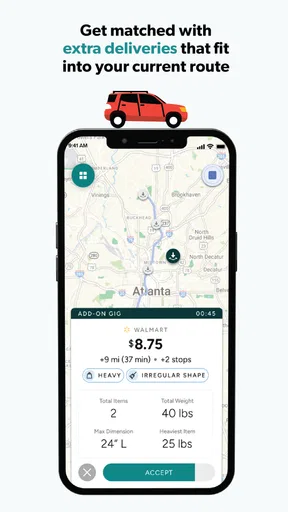
Our Review of Roadie Driver
 Analysis by Appyee
Roadie Driver is a business app for people who want to earn from deliveries that fit into routes they already plan to take. I approached it less like a traditional delivery job and more like a tool for making spare driving time useful. The basic idea is simple: people need items moved, and drivers can choose opportunities that make sense alongside their own travel. That distinction matters, because the app is most appealing when it supports a route you were already going to make rather than pushing you into aimless driving.
After using it, my overall impression is that it works best as one part of a careful driving routine. It can help turn an otherwise unproductive trip into a paid delivery, but it does not remove the need for judgment. You still have to think about timing, distance, vehicle space, pickup and drop-off practicality, and whether the offered job genuinely fits your day. I would recommend it to organized drivers who like making their own decisions, while warning anyone expecting a guaranteed stream of simple tasks that the experience may feel less predictable.
Building a delivery workflow before opening the app
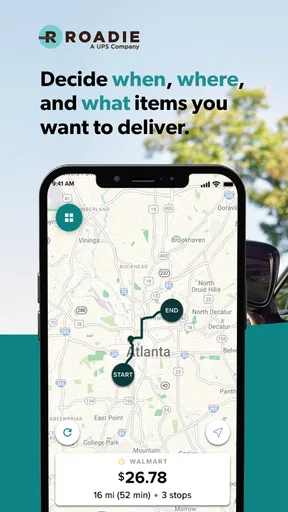
The most useful change in my approach was deciding my route first. Rather than opening Roadie Driver and accepting the first opportunity that appeared, I began by asking where I already needed to go, how much room I had in the vehicle, and how flexible my schedule was. That small habit prevents the app from controlling the entire day. It also supports the central strength of the service: matching a delivery with a journey that already has a practical direction.
For example, imagine I need to drive across town to visit family. Before leaving, I can check whether a delivery is available along that general path. If the pickup adds only a manageable detour and the item suits my vehicle, the trip may become more worthwhile. If the pickup sends me in the opposite direction or creates a tight arrival window, the sensible choice is to ignore it. The app is not a substitute for route planning; it is a way to add an opportunity to a route that already makes sense.
I found it helpful to create a quick pre-drive checklist. I consider the starting point, the final destination, the likely traffic conditions, the available trunk or cabin space, and whether I am comfortable handling the item. I also think about the return journey. A delivery that works perfectly on the outbound leg may leave me stranded far from where I need to be, making it less attractive than it first appears.
This is where Roadie Driver differs from the usual approach to delivery work. A conventional courier schedule often begins with a block of assigned stops, while a rideshare-style workflow may encourage drivers to stay active and wait for the next request. Roadie’s route-based appeal is different: I can be selective and treat each delivery as a decision attached to my own movement. That freedom is valuable, but it also means the quality of the experience depends heavily on how disciplined I am.
Capturing the right opportunities instead of every opportunity
When I browse available work, I try to capture only the details that affect the decision. I look at where the pickup begins, where the delivery ends, how closely it follows my route, and whether the timing is realistic. I do not want to remember a vague promise that a job is “nearby”; I want to know whether it is nearby in the direction I am actually traveling.
A practical trick is to group possible jobs mentally into three categories: direct matches, reasonable detours, and distractions. A direct match starts close to my route and finishes somewhere useful. A reasonable detour may still work if I have time and space. A distraction is attractive only because it is available, even though it makes the rest of the day harder. This simple filter keeps the app from turning a planned errand into a chain of unrelated drives.
Another useful habit is to check the physical side of the delivery before committing. A vehicle may have enough room in theory but still be awkward for a bulky or oddly shaped item. I would rather decline a job than discover at pickup that loading will be difficult, the item cannot be secured comfortably, or the delivery will interfere with passengers or personal belongings. The app can present an opportunity, but I remain responsible for deciding whether it is genuinely practical.
I also recommend leaving a buffer around any delivery that matters. Traffic, parking, loading, finding the correct entrance, and communicating at the destination can all take longer than the map suggests. A driver who accepts several tightly connected jobs may gain efficiency on paper but lose it through one small delay. My better results came from choosing fewer, more compatible deliveries instead of trying to fill every minute.
The app is free to install, and its Everyone age rating makes it broadly accessible from a store perspective. That should not be confused with effortless work. The real investment is time, fuel, attention, and vehicle wear. I judge a delivery by the complete journey, not just the visible payout or the short distance between two points. This is one of the most important trade-offs for a new driver to understand.
Turning individual deliveries into a repeatable routine
Roadie Driver becomes more useful when I follow the same process each time. Before driving, I decide what kind of route I am willing to take. While checking the app, I compare each opportunity with that route. After accepting one, I organize the trip around the pickup and delivery rather than continually changing direction. At the end, I make a quick note of what caused friction so I can make a better choice next time.
This routine is more sustainable than treating every available delivery as urgent. It protects my concentration and makes the work easier to fit around ordinary responsibilities. If I have a morning appointment, I can focus on deliveries that finish before it. If I am already traveling later in the day, I can look for a compatible opportunity then. The app supports this kind of flexible planning, but it does not create the routine automatically.
I would also separate “earning time” from “waiting time” in my own thinking. If I sit in a parking lot hoping something suitable appears, that is still time and fuel being spent. The app makes more sense when I check it at natural points in my day rather than building the entire day around uncertain availability. This is a subtle but important distinction between using Roadie Driver as a route enhancer and using it as a full-time schedule.
For a repeatable workflow, I keep my vehicle ready before checking for work. I clear enough space, make sure I have basic items for safe loading, and avoid accepting anything that would force a rushed preparation. I also plan where I can stop safely to review the next step. Looking at delivery information while driving is not worth the risk, so I prefer to handle decisions before leaving or when parked.
One of the app’s strengths is that it encourages a more deliberate relationship with location. Instead of asking only, “What job is available?” I ask, “What job fits the movement I am already making?” That shift can reduce unnecessary mileage and make the experience feel less chaotic. It is not a guarantee of better earnings, but it is a better foundation for controlling costs and protecting my time.
Where the workflow can break down
The biggest failure point is accepting a delivery because it looks convenient at first glance. A pickup may be close, yet the drop-off may pull me away from my actual destination. A short-looking route may involve difficult parking or a long wait at the location. A job that fits the vehicle may still conflict with an appointment. These are not defects that an app can solve; they are reasons to slow down before committing.
Timing is another source of stress. I would not build a schedule with no room for delays, especially when the delivery is only one part of my day. If a trip includes school pickup, work, medical appointments, or a fixed reservation, I would treat the delivery as optional unless the timing is comfortably flexible. The ability to choose work is useful only when I am willing to say no.
Navigation can also become mentally expensive when a driver keeps switching between personal errands and delivery instructions. I found it easier to finish one clear stage before reconsidering the next. Constantly reshaping the route may appear efficient, but it can increase mistakes and make the drive tiring. A sustainable system values attention and calm as much as distance.
There is also a personal suitability question. Someone who dislikes loading items, coordinating handoffs, or making independent route decisions may find this style of work frustrating. The app is not ideal for a person who wants every detail arranged in advance or who prefers a fixed shift with a predictable sequence. In that situation, a scheduled courier role or a conventional delivery employer may be a better fit.
On the other hand, drivers who already travel frequently may appreciate the flexibility. The strongest use case is not necessarily someone looking to drive continuously. It may be a person who makes regular regional trips, has a suitable vehicle, and wants to evaluate compatible delivery opportunities without abandoning their existing plans. That is a narrower audience than the broad word “driver” suggests, but it is where the concept feels most natural.
Questions I would answer before adopting it
Is Roadie Driver suitable for a first-time delivery driver? I think it can be, provided the person starts conservatively. I would begin with routes I know well, accept only straightforward deliveries, and avoid stacking jobs until I understand how much time pickups and drop-offs really take. Familiar roads reduce the mental load, leaving more attention for the handoff and the practical details.
Can it replace a regular job? I would not make that assumption based on the app alone. Its value depends on the opportunities that fit a driver’s location, schedule, vehicle, and willingness to travel. Someone seeking dependable hours may prefer employment or a platform built around scheduled shifts. Roadie Driver is better understood as flexible delivery work that rewards selectivity and planning.
Does it make sense for short personal trips? Sometimes, but only when the delivery aligns naturally. A small errand should not become a long detour simply because a job is visible. I compare the complete route and the time involved, then decide whether the added responsibility is worth it. If the delivery changes the character of the trip from convenient to stressful, I skip it.
What should I do if a delivery becomes impractical after acceptance? My first response would be to stay calm, stop safely, and follow the app’s available process for handling the situation rather than improvising while driving. I would also avoid accepting another job until the current one is resolved. The important lesson is to treat each delivery as a commitment, not as a casual item that can be rearranged without consequences.
Does the app require a powerful or specialized vehicle? I would judge that case by case rather than assuming one vehicle suits every opportunity. The right choice depends on the item, available space, route, and the driver’s comfort with loading and transport. A compact car may be perfectly practical for some deliveries but unsuitable for others. Being honest about those limits is safer than trying to make every job fit.
Who will get the most from this approach
Roadie Driver is a strong candidate for people who already drive around their area, enjoy making independent choices, and can evaluate whether a delivery belongs on a route. It may suit commuters with flexible travel patterns, people running regular regional errands, and drivers who prefer selecting individual opportunities over accepting a fixed schedule. The app’s free price also makes it easy to explore without paying an upfront app fee, although the wider cost of driving still deserves careful attention.
I would be more cautious about recommending it to someone with strict daily timing, limited vehicle space, or no tolerance for waiting and route changes. It is also not the first option I would suggest to a person who wants a guaranteed number of tasks or a clearly structured workday. In those cases, a scheduled delivery service, local courier company, or another category of driving platform may provide a better match.
The app has built a sizable audience, with over a million installs and an average rating of 3.9 from around twenty-six thousand ratings. I read that as evidence of meaningful interest rather than a promise that every driver will have the same experience. The rating feels consistent with an app whose usefulness depends strongly on location, delivery selection, and personal workflow. Some drivers will find the flexibility valuable; others may find the uncertainty and practical responsibility tiring.
Roadie, Inc. continues to maintain the app, and the current version is 2.143.1. It requires iOS or Android version 12 or later, so I would check device compatibility before planning around it. Those details are easy to overlook when an app sounds simple, but a driver needs dependable access during a busy day. An older phone that cannot run the required operating-system level could become an unnecessary obstacle.
My final assessment after fitting it into a real routine
What I like most about Roadie Driver is the way it can connect a delivery with movement that already exists. It gives me a reason to think in terms of route quality instead of simply chasing activity. When I choose carefully, the app feels like a practical addition to my day: I keep control of my schedule, avoid unnecessary detours, and use spare capacity more intelligently.
What I like least is that the flexibility places much of the responsibility on the driver. The app cannot tell me whether a delivery will ruin my afternoon, whether loading will be awkward, or whether the return trip makes the opportunity unattractive. Those decisions require common sense and honest accounting of time, fuel, and energy. A driver who ignores those factors may end up busier without actually having a better day.
My recommendation is therefore specific. Try Roadie Driver if you already have sensible routes, enough schedule flexibility to absorb surprises, and the patience to reject poor matches. Use it as a controlled layer on top of your normal travel, not as a reason to drive without a plan. The best results come from disciplined selection, not maximum acceptance.
As a free business app from Roadie, Inc., it is worth exploring for the right kind of driver, and its Everyone rating keeps the product broadly approachable. I would not call it a universal replacement for scheduled courier work, but I do think it offers a distinctive option for people who want delivery opportunities to follow their routes rather than dictate them. If that matches the way you already move through your day, Roadie Driver may become a useful part of a sustainable driving system.
Privacy and Permissions
See what permissions an app requests and how it handles your data.
- Location
- approximate location (network-based), precise location (GPS and network-based)
- Phone
- read phone status and identity
- Photos/Media/Files
- read the contents of your USB storage, modify or delete the contents of your USB storage
- Storage
- read the contents of your USB storage, modify or delete the contents of your USB storage
- Camera
- take pictures and videos
- Microphone
- record audio
- Wi-Fi connection information
- view Wi-Fi connections
- Device ID & call information
- read phone status and identity
- Other
- view network connections, pair with Bluetooth devices, access Bluetooth settings, change network connectivity, full network access, change your audio settings, run at startup, reorder running apps, control vibration, prevent device from sleeping, Google Play license check, read Google service configuration
Verdict
Strengths of Roadie Driver
- Flexible scheduling lets drivers choose when to accept delivery work.
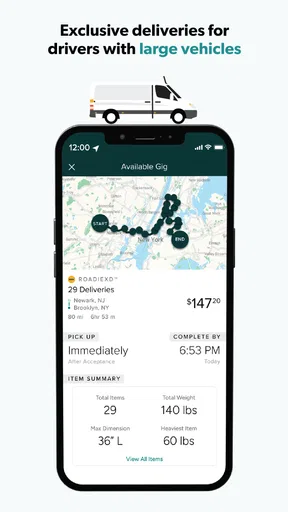
- Supports multiple delivery types, including packages, groceries, and larger items.
- In-app navigation and delivery details help organize each trip.
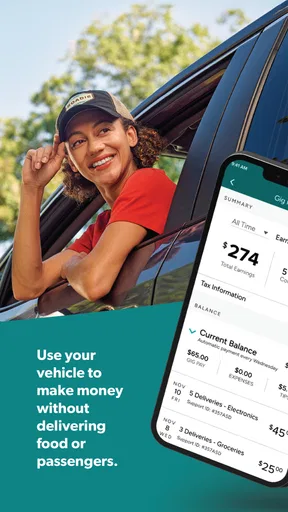
- Drivers can review gig earnings before deciding whether to accept.
- Available across many U.S. locations, offering varied delivery opportunities.
Limitations of Roadie Driver
- Driver demand and available gigs can vary significantly by location.
- Some deliveries involve bulky items or difficult loading and unloading.
- Long-distance trips may be less profitable after fuel and vehicle costs.
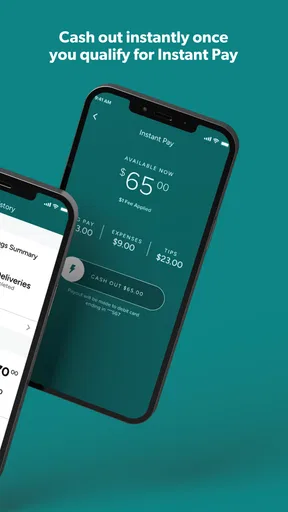
- Payout timing and eligibility can depend on the delivery and driver account.
- The app may require detailed photos, signatures, or delivery documentation.
Similar Picks in This Category
View All
LinkedIn: Community & Network
LinkedIn3.8

Zoom Workplace
zoom.com4.1

Microsoft Teams
Microsoft Corporation4.6

Meta Business Suite
Meta Platforms, Inc.4.6

Webex Meetings
Cisco Systems, Inc.4.5

TeamViewer Remote Control
TeamViewer4.4
Frequently Asked Questions
What is Roadie Driver, and how does it work?
Roadie Driver is the delivery-partner app for people who want to earn money by transporting items through the Roadie crowdsourced delivery network. After creating an account and completing the required verification, drivers can browse available delivery gigs, review the pickup and drop-off details, see the expected earnings, and choose jobs that fit their route, vehicle, and schedule. The app provides navigation and delivery instructions, while the driver is responsible for collecting and completing each shipment properly.
What are the requirements to become a Roadie Driver?
To use Roadie Driver, you generally need to meet Roadie’s eligibility requirements, which may include being at least 18 years old, having a valid driver’s license, access to a suitable vehicle, and maintaining legally required auto insurance. You must also pass the account verification process and provide accurate personal and vehicle information. Requirements can vary by location and delivery type, so checking the latest rules inside the app or on Roadie’s official website is important before applying.
How much money can I make with Roadie Driver?
Your earnings depend on the delivery gigs available in your area, the distance involved, the size or complexity of the item, and how many deliveries you complete. Roadie usually displays the expected payout before you accept a gig, allowing you to compare the offer with your fuel, vehicle maintenance, parking, and travel costs. Income is not guaranteed, and demand can vary significantly by day and location. Drivers should calculate their net earnings rather than focusing only on the advertised payout.
Can I choose which deliveries to accept on Roadie Driver?
Yes, Roadie Driver is designed to give drivers flexibility when selecting delivery opportunities. You can review available gigs and decide whether the pickup location, destination, timing, item requirements, and offered payout suit you. You are not normally required to accept every offer shown in the app. However, once you accept a delivery, you should follow the instructions carefully and complete it reliably, because cancellations, missed deadlines, or delivery problems may affect your account standing and access to future opportunities.
What should I know about safety, privacy, and delivery problems?
Before accepting a gig, review the item details, pickup instructions, delivery window, and any special requirements to make sure you can complete it safely. Avoid transporting items that do not fit securely in your vehicle, and follow local traffic and parking laws. The app may use location services and collect account, trip, and delivery information to operate the platform. If an item is damaged, missing, unavailable, or the recipient cannot be reached, use the in-app support process and document the situation rather than improvising a handoff.
